

Products
Long-range radio devices
NetSpeak devices use advanced radio signals to communicate over remarkable distances, up to 10 km, and to bring onto the platform the data of sensors distributed even a long way from the collection centre.
10 km
radio range
Two-way
data and commands
Single
network for sensors and actuators
Communication
The radio that holds the plant together
Distance is the constraint that decides whether a plant can be monitored or remains isolated. Long-range radio communication solves the problem at its root: the nodes talk to each other even when there are kilometres between one measurement point and the next.
- Range of up to 10 km between device and collection point.
- Two-way communication: data goes up to the platform and commands come down to the field.
- Installation on existing plants, with no excavation work or additional cabling.
- A network that gradually accepts new devices.
How it works
How a long-range radio link is created
A radio link cannot be improvised: the range depends on how the devices see each other, on what stands between them and on where they are fixed. The work therefore happens in two stages, one at the desk and one in the field.
- Site surveyThe points to be connected and their position relative to each other are identified: distance, difference in height, fixed obstacles such as buildings, trees or metal structures.
- Choosing the installation pointThe device is placed where the path towards the next node stays clear and where power and fixing are practicable; when needed, a mast or a dedicated support is used.
- Field testBefore leaving the plant in operation the link is checked: if the signal is not stable, the position is changed or an intermediate node is added.
- CommissioningThe device is entered into the network and the supervision platform, identifying the data it transmits and the commands it receives.
- Verification over timeThe link remains under observation: changes in signal quality become visible before they turn into a loss of data.
This approach keeps the project aligned with the reality of the site: the final configuration is decided by looking at the field, not only at the plant layout drawing.
Features
How they behave in the field
Technical data
- Radio range up to 10 km
- Communication two-way
- Management from the web platform
- Installation industrial and commercial
- Power supply depending on the installation
Reliability
Radio coverage is assessed before installation, so every node has a verified link. The operation of the network then remains under continuous observation by the dedicated servers.
If a device stops responding, the platform reports it immediately and it becomes possible to intervene without waiting for the next manual reading in the field.
The parts of the link
What the network is made of
The network is born from the combination of a few elements, repeated as many times as needed. Their role changes according to position: there is the point that collects the data and there are the nodes that carry it there.
Collection point
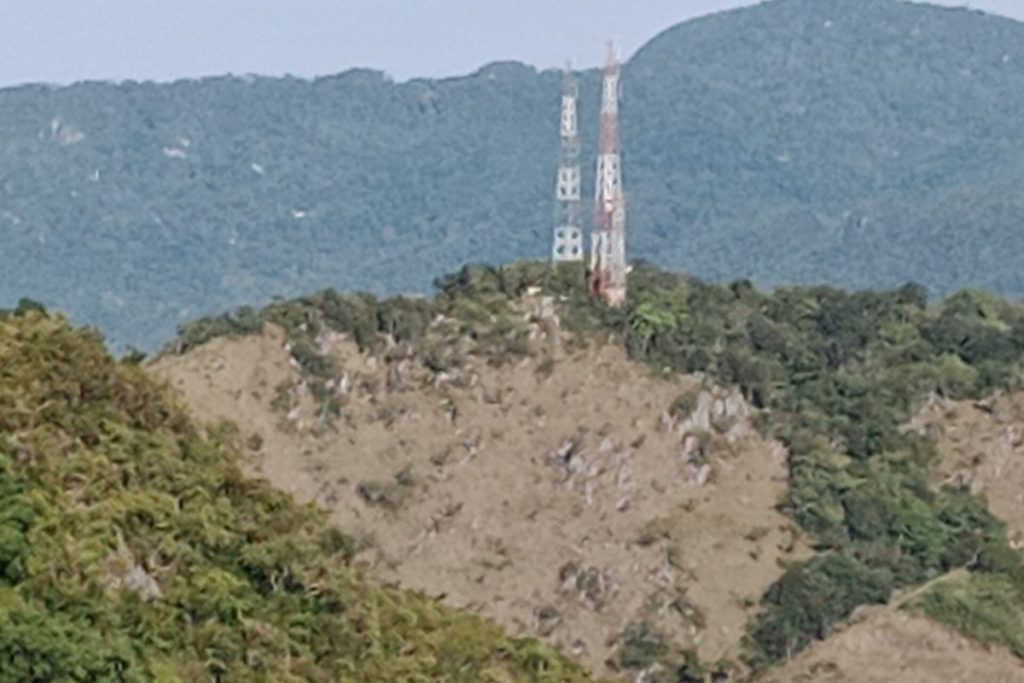
The node that receives the data from all the others and delivers it to the platform. It is the reference point of the network: when measurement points are scattered, coverage is measured from there.
Repeater nodes
Where distance or obstacles prevent a direct link, an intermediate node receives the signal and repeats it. It is the way to get past a hill, a building or an overlong stretch of plant.
Links to the outside
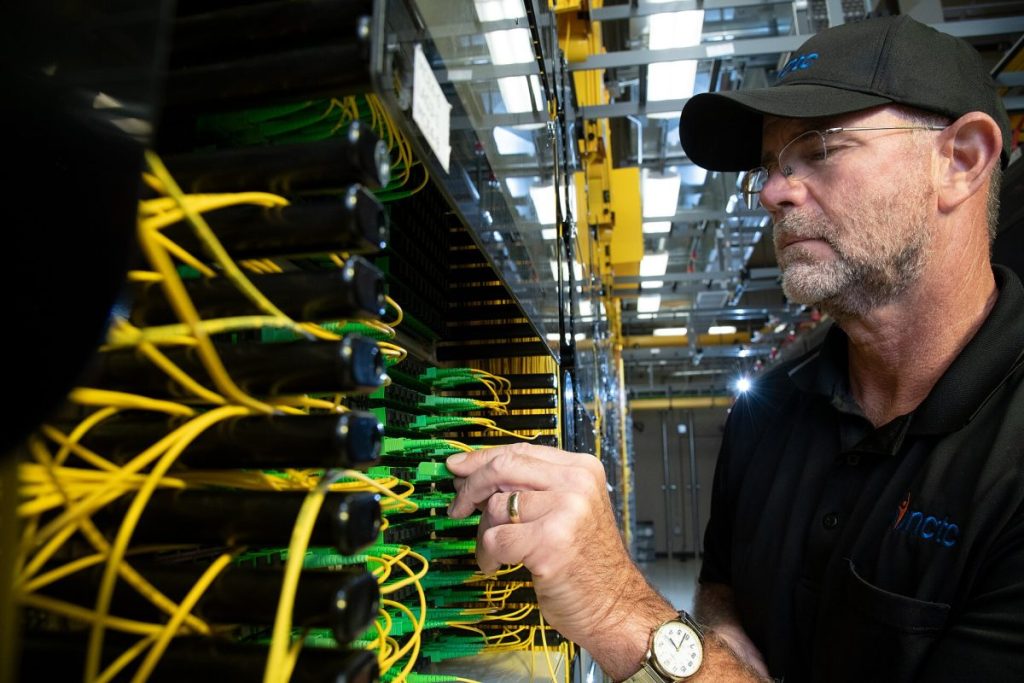
When the network has to go beyond the perimeter of the plant, the outward link carries the data to supervision. It is the point where the radio infrastructure connects to the one already in place.


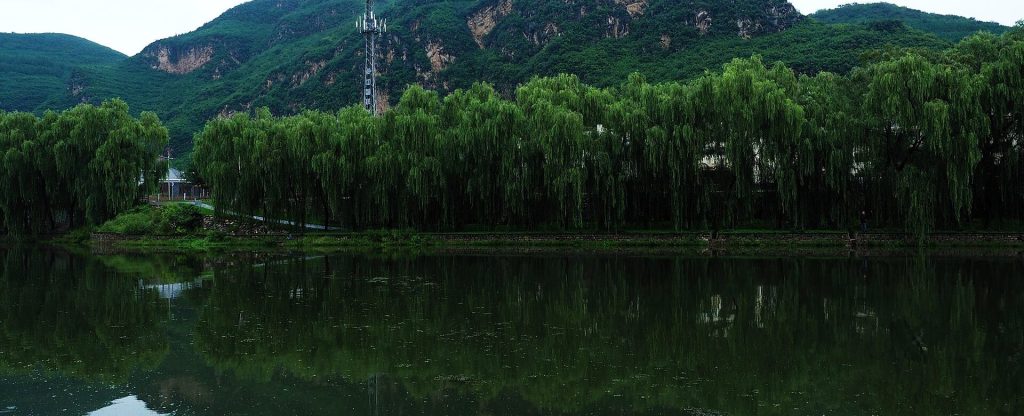
Long-range radio is exactly for places where a cable does not reach or is not worthwhile: a valley, a stretch of countryside, an isolated work area. In these contexts distance stops being a design constraint and becomes a condition the network absorbs.
Uses
Where they are installed
Industrial processes
Machinery, production lines and departments far apart, connected to the same communication infrastructure.
Building automation and buildings
Extensive spaces and different floors covered by a single network, without multiplying cabling.
Distributed plants
Stations scattered across the territory reached by a single data collection centre.
In all three cases the location changes, not the operation: the same device is installed in a department, in a building cabinet or on a support in open countryside, and from there it joins the network in exactly the same way as the others.
From the platform
What you can see about the radio devices
A radio device is not a passive component: the platform knows its status and keeps it under control together with the data it transmits.
Node status
- Node reachable checked continuously
- Link quality observed over time
- Data flow intact or flagged
- Commands to the field with a visible outcome

Immediate reading
Information on the status of the links is gathered in a single environment, without having to query individual devices.
Targeted intervention
When the problem is on a node, you know which one: the intervention focuses on that point instead of starting with a blanket site survey.
Frequently asked questions
Questions about the radio devices
What reduces the range of a link?
Physical obstacles along the path: thick walls, metal structures, changes in height, tall vegetation. That is why the installation point is chosen after a survey and verified with an on-site test, adding an intermediate node when needed.
Can one node serve several sensors at once?
Yes: the node gathers the signals from the sensors present at that point and transmits them as a single stream to the network. It is the simplest way to keep a machine or an area with several variables under control.
What happens if a node disconnects?
The platform reports it immediately, because it notices the absence of the node before the operator misses the data. Restoration can be preceded by a remote check that distinguishes a connectivity problem from a power failure.
Can you start with a few points and expand later?
Yes, and it is the most common route: you start with the most useful measurement points and add nodes when the plant requires it. The network is not rebuilt, it grows.
Do you need to cover a significant distance?
Tell us where the points to be connected are located: we will assess the most suitable radio configuration together.